
Imagine starting your morning with a cup of coffee and an email from a vendor you know.
The logo looks right. The wording sounds professional. The request seems perfectly reasonable.
But it isn’t them.
Online scams have come a long way from the badly written “urgent” emails most of us learned to avoid. Today, cybercriminals can use AI and information available online to create convincing, personalized phishing messages designed around someone’s job, business relationships and responsibilities. Microsoft has documented campaigns using generative AI to create phishing emails tailored to a victim’s role. Inside an AI-enabled device code phishing campaign [microsoft.com]
For businesses in Boca Raton and across South Florida, that means protecting your company isn’t just about telling employees, “Don’t click suspicious links.”
It’s about helping them recognize when something that looks completely normal isn’t.
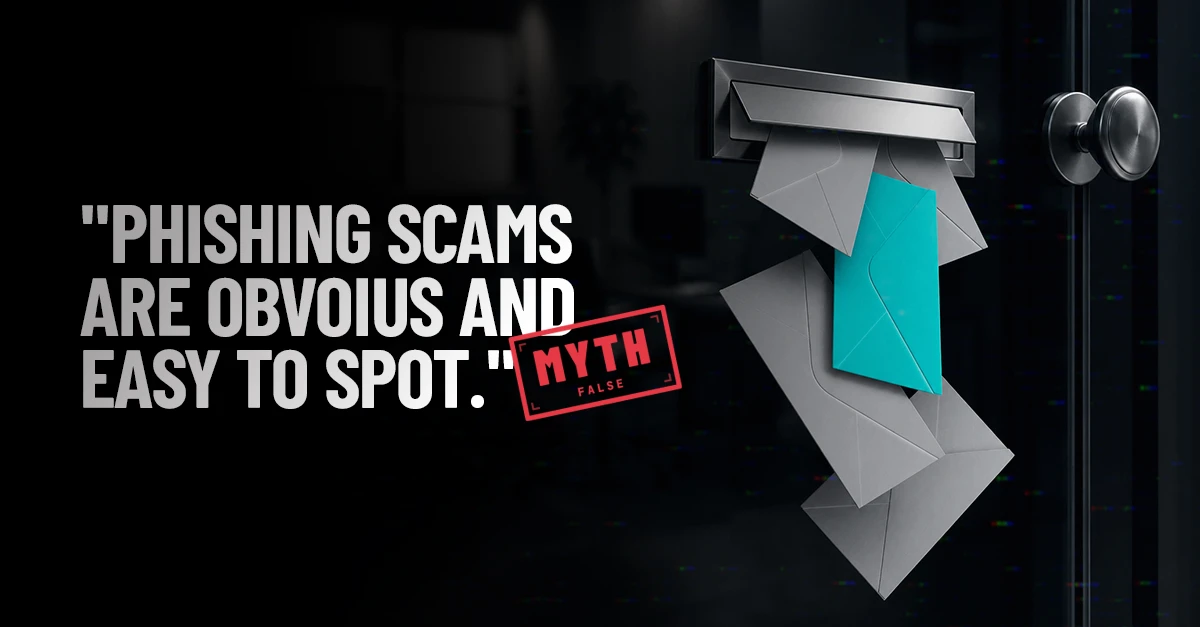
The Biggest Phishing Myth: “I’d Know It If I Saw It”
We still tend to picture phishing as an email with bad grammar, a strange sender and an obviously suspicious link.
That’s the old version.
Modern phishing attempts can imitate legitimate business communications and target specific roles, workflows and relationships. CISA describes phishing as a form of social engineering used to trick people into visiting malicious sites or providing login credentials. Phishing Guidance: Stopping the Attack Cycle at Phase One [cisa.gov]
And that’s what makes today’s scams dangerous.
Smart people can get fooled. Careful employees can get fooled. Even tech-savvy people can get fooled.
Good cybersecurity assumes that people are human and puts safeguards around them.
Online Scams Your Team Should Know About
Email Phishing
An email appears to come from a legitimate company, vendor or other trusted source. The goal may be to steal login credentials, encourage someone to visit a malicious website or deliver malware. Phishing Guidance: Stopping the Attack Cycle at Phase One [cisa.gov]
AI-Powered Phishing
AI can help criminals create more polished and personalized messages. For example, Microsoft has observed generative AI being used to create targeted phishing emails based on the recipient’s role and business context. Inside an AI-enabled device code phishing campaign [microsoft.com]
Spear Phishing
Rather than sending the same message to thousands of people, the scam is aimed at a particular person or organization and designed to appear relevant to them.
Business Email Compromise
This is the “Can you take care of this quickly?” scam businesses need to take seriously. An attacker may impersonate someone trusted in an attempt to redirect a payment, obtain sensitive information or convince an employee to take an action they normally wouldn’t.
Smishing
Phishing doesn’t have to arrive in your inbox. Smishing uses text messages to try to persuade someone to click a link, call a number or provide information.
Vishing & Voice Cloning
Phone calls and voice messages can also be used to impersonate people or organizations you trust.
QR Code Phishing
That QR code on an email, invoice, flyer or document might not take you where you think it does. A malicious QR code can direct someone to a fraudulent website designed to capture information.
How Can You Protect Your Business?
The good news? You don’t have to rely on your employees spotting every scam.
A stronger approach combines people, processes and technology:
- Train your team. Keep employees aware of newer phishing and social engineering tactics.
- Strengthen email security. Use appropriate security controls to help identify malicious messages.
- Use multi-factor authentication. CISA recommends MFA and identifies phishing-resistant MFA as the strongest form. Implementing Phishing-Resistant MFA [cisa.gov]
- Verify unusual requests. Especially when money, passwords or sensitive business information are involved, confirm the request through another trusted method.
- Think before sharing. Public information can provide criminals with useful context for more targeted attacks.
- Keep systems updated. Make security updates part of your normal business routine.
- Make reporting easy. Employees should know exactly what to do when something doesn’t look right.
Most importantly, build a culture where employees feel comfortable saying:
“Something about this doesn’t feel right. Can we check it?”
That pause can matter.
Cybersecurity Should Protect Your Business Without Slowing It Down
Online scams aren’t just an IT problem.
One convincing message can put business accounts, company data and finances at risk. That’s why cybersecurity needs to be practical, understandable and built around the way your team actually works.
That’s where BoomTech comes in.
As a Boca Raton managed IT services and cybersecurity provider, BoomTech helps businesses put practical safeguards in place, strengthen their security posture and give employees the knowledge and tools they need to work confidently.
Not sure how well your business would handle a convincing phishing attempt?
Let’s find out before the bad guys do.
Schedule a 10-minute discovery call with BoomTech to talk about your current cybersecurity setup and where you may have opportunities to strengthen your defenses.

Categories
Hear from Philipp Baumann, owner and founder of BoomTech: